Cart
0
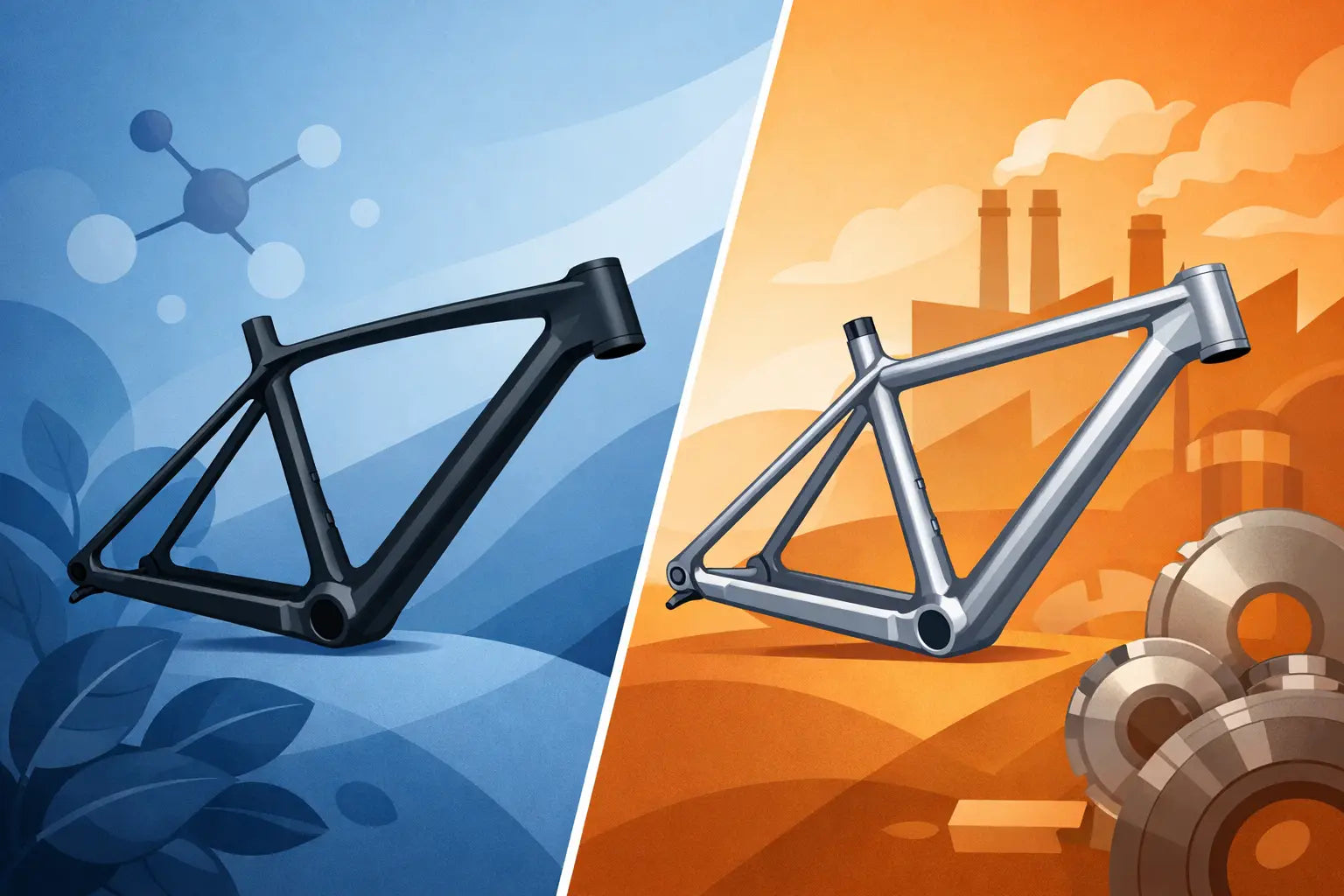
A rider upgrading from a basic hybrid to their first serious road or gravel bike usually asks the same question within minutes - carbon frame vs aluminium frame, which one actually makes more sense? It is a fair question, because the right answer depends less on hype and more on how you ride, what you expect from the bike, and whether you value outright performance or practical long-term value.
For some riders, carbon is the dream upgrade. For others, aluminium is the smarter buy and the bike they will enjoy more over the next few years. The trick is to look past marketing language and focus on ride feel, maintenance, durability, and price.
Carbon frame vs aluminium frame: the real difference
The biggest difference is not simply that one material is lighter and the other is cheaper. It is how each frame behaves on the road.
Carbon fibre frames are built by layering material in specific directions, which allows brands to tune stiffness and comfort more precisely. That is why a good carbon road bike can feel quick under power yet still take the sting out of rough tarmac. On longer rides, that smoother ride quality is often what riders notice first.
Aluminium frames, by contrast, are valued for their directness. They tend to feel sharp, efficient, and responsive. Modern aluminium is far better than the harsh, unforgiving image some riders still have in mind. A well-designed aluminium frame with a carbon fork, quality tyres, and sensible pressure can ride very well indeed.
So when people compare carbon and aluminium, they are often really comparing refinement versus value. Carbon usually gives more sophistication in ride feel. Aluminium usually gives more performance per pound spent.
Weight matters, but not as much as people think
Weight is the headline reason many riders want carbon. In general, a carbon frame will be lighter than an aluminium frame at a similar level of quality. That matters when climbing, accelerating, or trying to build a bike that feels lively and eager.
But frame material alone does not decide how heavy a bike feels. Wheels, tyres, groupset, gearing, and overall fit all make a big difference. A badly chosen carbon bike can feel less impressive than a well-specced aluminium one.
This is especially relevant for riders buying in a set budget. If choosing carbon means accepting heavier wheels or lower-tier components, the complete package may not be better. An aluminium bike with a stronger spec, such as a better Shimano groupset or more capable wheels, can be the more satisfying option in real use.
For everyday riding in urban conditions, a small weight saving is rarely the deciding factor. For racing, fast group rides, and long climbing days, it starts to matter more.
Comfort on rough roads
If your rides are getting longer, comfort is where carbon often earns its price.
A good carbon frame can absorb road buzz in a way aluminium usually cannot match. That does not mean carbon is soft or vague. It means the frame can be engineered to reduce fatigue without losing efficiency. Over two or three hours in the saddle, that can leave you fresher and more willing to keep pushing.
Still, comfort is not only about frame material. Tyre width has a huge effect. Many riders are surprised by how much more comfortable a modern aluminium bike becomes with 28mm or 32mm tyres, set up properly. Saddle choice, bar tape, and riding position matter too.
For Singapore roads and mixed urban riding, this matters because not every route is perfectly smooth. Expansion joints, drain covers, patched sections, and rougher surfaces all add up. If comfort is a top priority, carbon has an advantage, but aluminium paired with quality Continental or Schwalbe tyres can still deliver a very good ride.
Durability and day-to-day ownership
This is where the conversation gets more nuanced.
Aluminium has a reputation for being tough, practical, and easier to live with. That reputation is mostly deserved. It handles everyday knocks better in the sense that cosmetic damage is often less worrying. If the bike is going to be locked regularly, loaded onto racks, used for commuting, or ridden in crowded parking areas, aluminium feels less precious.
Carbon is durable when designed and used properly, but it does not like impact in the same way. A carbon frame can last for many years and perform brilliantly, yet a sharp knock from a crash or transport accident deserves proper inspection. That does not make carbon fragile in normal riding, but it does mean ownership can require a bit more care.
For many riders, that practical difference matters more than lab tests. If you want a bike you can use hard without constantly worrying about every scrape, aluminium is appealing. If you are careful with your equipment and want the best ride quality your budget allows, carbon becomes easier to justify.
Carbon frame vs aluminium frame for value
Aluminium usually wins on value. That is the simple truth.
At entry and mid-level budgets, aluminium bikes often give you better overall specification for the money. Instead of spending extra on frame material alone, you may be able to get stronger components, hydraulic disc brakes, better tyres, or a drivetrain upgrade. Those things can improve daily riding more than the word carbon on a frame badge.
That is why many first proper road and gravel bikes are aluminium. They let riders step into reliable performance without overspending. For someone moving up from a casual bike or buying their first drop-bar bike, this is often the most balanced route.
Carbon starts to make stronger financial sense when the rider already knows what they want. If you are training regularly, riding long distances, or chasing a lighter and smoother machine, the added cost can feel worthwhile every time you ride.
There is also the question of long-term satisfaction. Some riders buy aluminium, enjoy it, and never feel the need to upgrade. Others know from the start they will keep thinking about carbon. In that case, buying once and buying right can save money later.
Who should choose aluminium?
Aluminium suits riders who want strong performance without stretching the budget. It is ideal for commuters, fitness riders, newer enthusiasts, and anyone who wants a dependable all-rounder with fewer ownership worries.
It also makes a lot of sense if you are prioritising specification. An aluminium road or gravel bike with a dependable Shimano setup and sensible finishing kit can be a very smart buy. For many people, that combination offers more real-world enjoyment than a cheaper carbon frame paired with compromises elsewhere.
If your riding is varied - weekday transport, weekend spin, occasional longer ride - aluminium remains one of the most practical choices on the shop floor.
Who should choose carbon?
Carbon suits riders who care about ride quality, lower weight, and a more refined feel at speed. If you are covering serious mileage, joining fast bunch rides, entering events, or simply want a bike that feels more responsive and less fatiguing over distance, carbon has a clear appeal.
It also suits riders who already understand fit and geometry and are shopping more intentionally. At that point, the frame material becomes part of a wider performance package rather than just a status upgrade.
For example, a rider looking at a Sava carbon road bike or a performance-focused model in a curated range may value not only lower weight but also the smoother ride and sharper acceleration that come with a better overall build.
The frame is only part of the decision
It is easy to get stuck on material and ignore the rest. That is where buyers sometimes make expensive mistakes.
A bike that fits properly will nearly always feel better than one built from a more prestigious material but sized poorly. Geometry matters. Tyres matter. The wheelset matters. Even handlebar width and crank length can influence comfort and efficiency more than riders expect.
This is why a proper setup and after-sales support have real value. A well-chosen aluminium bike that is assembled correctly, checked thoroughly, and adjusted to suit your riding can outperform expectations. The same is true of carbon - it shines most when the whole package is right.
If you are choosing between two bikes, do not ask only which material is better. Ask which complete bike gives you the best fit, best parts, best riding experience, and best support after purchase.
So which one should you buy?
If your priority is value, practicality, and strong everyday performance, choose aluminium with confidence. It is not the budget compromise many assume it is. Modern aluminium bikes are fast, capable, and often the smartest place to start.
If your priority is lower weight, more comfort on long rides, and a more premium ride feel, carbon is worth serious consideration. It will not automatically make you faster, but it can make the bike feel better in the ways enthusiastic riders notice most.
If you are still deciding, the best move is to compare complete bikes rather than materials in isolation. At Gcycle, that often means looking closely at the frame, geometry, Shimano spec, tyres, and how the bike will actually be used week to week.
Buy the bike that matches your riding, not the one that sounds most impressive on paper. The right frame is the one that keeps you riding further, more often, and with fewer regrets.