Cart
0
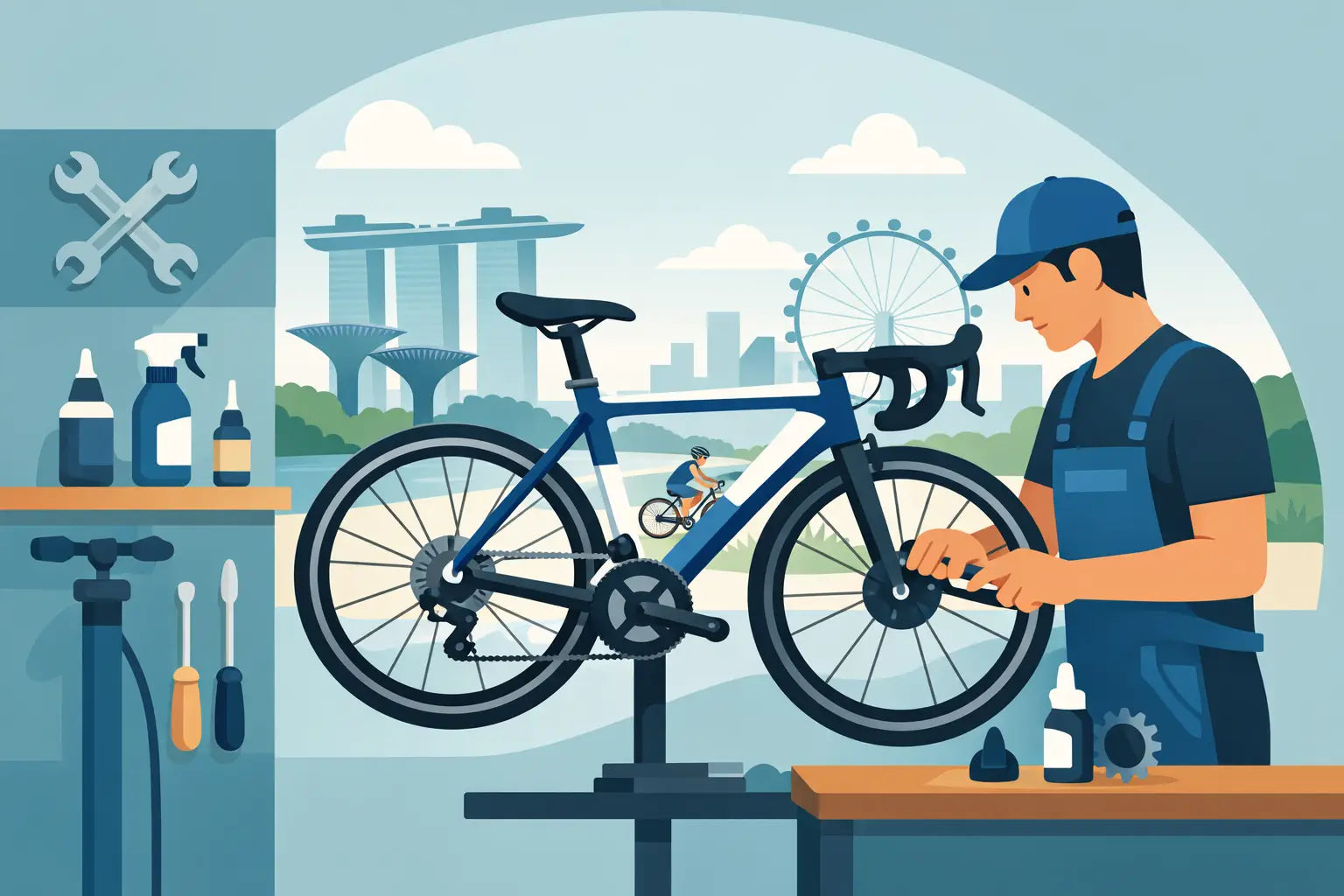
A bike that feels fine on Monday can start creaking, skipping gears, or braking poorly by the weekend - especially if it lives through rain, heat, road grit, and regular use. In Singapore, that change happens faster than many riders expect.
If you commute daily, ride park connectors on weekends, or push a road or gravel bike hard, servicing is not a nice-to-have. It is what keeps the bike safe, efficient, and worth owning long term. This complete bicycle servicing guide in Singapore is built to help you understand what actually needs attention, how often to service different bikes, and when a quick adjustment is enough versus when a full workshop check makes more sense.
What a complete bicycle servicing guide in Singapore should cover
A proper service is more than wiping the frame and pumping the tyres. Good servicing checks the bike as a system. That means braking, shifting, wheel condition, tyre wear, bearings, drivetrain wear, bolts, alignment, and all the small adjustments that affect how the bike feels on the road.
For most riders, the key goal is simple - prevent small issues from becoming expensive ones. A dry chain can become premature cassette wear. Slightly loose headset play can turn into rough bearings. A tyre with tiny cuts may still hold air today, but not for long.
The exact service scope depends on the bike type and how you ride. A foldable bike used for daily transport has different stress points from a carbon road bike running Shimano 105 or Ultegra Di2. A gravel bike ridden in wet conditions will usually need more frequent drivetrain attention than a lightly used hybrid.
How often should you service your bike?
There is no single schedule that fits every rider. Usage matters more than time alone. Still, most bikes benefit from a basic check every few months and a more complete service at least once or twice a year.
If you ride a few short trips each week on dry roads, you can usually stretch service intervals a bit. If you commute daily, fold and unfold the bike constantly, ride in the rain, or train hard on weekends, you should service it sooner.
A practical guide looks like this:
Casual riders
If your bike comes out mainly for leisure rides, a service every 6 to 12 months is usually sensible. You should still keep the chain lubricated, check tyre pressure regularly, and pay attention to braking feel between visits.
Daily commuters
For commuter bikes and foldables, every 3 to 6 months is more realistic. Frequent stop-start riding, exposure to wet roads, and repeated folding place extra strain on cables, hinges, drivetrains, and braking surfaces.
Enthusiasts and performance riders
Road, gravel, and mountain riders who cover higher mileage often need drivetrain checks much earlier. If you are riding hard every week, plan periodic inspections and a more complete service roughly every 3 to 4 months depending on mileage, weather exposure, and component level.
What happens during a proper bicycle service?
A useful service should improve performance you can actually feel. Smooth shifting, even braking, quiet running, and better rolling efficiency are the obvious results. Behind that, the workshop should be checking wear and setup with care.
Drivetrain inspection and adjustment
This includes chain wear, cassette and chainring condition, derailleur alignment, cable tension, and indexing. On bikes with Shimano drivetrains, precise adjustment makes a big difference. If gears hesitate under load or skip across the cassette, the problem may be minor adjustment - or it may be a worn chain and cassette combination.
The trade-off is straightforward. Servicing a drivetrain early costs less than replacing multiple worn parts later. Riders who delay chain replacement often end up paying for a cassette and sometimes chainrings as well.
Brake tuning and safety checks
Brake pads wear gradually, so many riders miss the warning signs. A service should check pad life, rotor condition on disc systems, cable tension on mechanical brakes, and alignment so nothing rubs or pulls unevenly.
In wet conditions, braking performance can change quickly. That matters on fast descents, but it matters just as much in city traffic where stopping distance can be the difference between a near miss and a crash.
Wheels, tyres, and rolling condition
Wheel trueness, spoke tension, hub play, tyre wear, and pressure all affect ride quality. If your bike feels sluggish or unstable, the issue is not always the frame or drivetrain. Sometimes it is a worn tyre, a slight buckle in the wheel, or bearings that no longer spin cleanly.
Quality tyres such as Schwalbe and Continental generally reward regular checks. They perform well, but they still wear based on mileage, road surface, and pressure habits.
Bearings and contact points
Headset, bottom bracket, wheel hubs, pedals, saddle rails, and seatpost areas can all develop noise or play. Not every creak means something serious, but it should not be ignored. Many workshop jobs are really about locating and fixing these small mechanical annoyances before they become real wear issues.
Bolt check and frame inspection
A complete service should also include a torque check on key bolts and a visual inspection of the frame and fork. This is especially important for lightweight road and carbon bikes, but it matters for foldables and commuters too. Hinges, clamps, stems, and seatposts all need proper attention.
Bikes in Singapore wear differently
A complete bicycle servicing guide in Singapore should account for local conditions rather than copying advice from colder, drier countries. Heat, humidity, sudden rain, and urban grime change maintenance needs.
Chains dry out faster than many riders realise. Bolts and exposed metal parts can show corrosion if neglected. Brake surfaces collect road residue. Tyres also pick up glass fragments and embedded grit from urban roads and park connectors.
That is why riders here benefit from a quicker inspection cycle, even if the bike still feels usable. A bike can remain rideable while wearing down in expensive places.
Signs your bike needs servicing now
Some problems are obvious. Others creep in gradually. If the bike no longer feels as smooth, do not wait for a complete failure.
Book a service if you notice gears jumping under pressure, brakes squealing or feeling weak, wobble through the wheels, repeated punctures, creaking from the bottom bracket area, rough steering, or a chain that looks dry and dirty despite cleaning. Foldable bike owners should also pay attention to hinge stiffness, clamp security, and alignment after folding.
If you are training seriously, there is another reason to service early - performance. A bike that shifts badly or drags through the drivetrain makes every ride less efficient.
DIY maintenance versus professional servicing
There is a place for both. Every rider should learn the basics: checking tyre pressure, cleaning the bike properly, lubricating the chain, and spotting obvious wear. That saves time and helps you catch problems early.
But home maintenance has limits. Accurate gear indexing, brake alignment, bearing assessment, wheel truing, and diagnosing hidden wear require tools and experience. It is easy to over-tighten bolts, misjudge chain wear, or chase a noise without fixing the cause.
The practical answer is not DIY or workshop. It is both. Do the routine care yourself, then book professional servicing for adjustment, diagnostics, safety checks, and replacement work.
Choosing the right workshop for your bike
Not every bike has the same servicing needs. A foldable from Dahon, Tern, Fnhon or 3Sixty may require attention to hinges, compact cable routing, and small-wheel handling issues. A Java or Sava road bike may need more precise drivetrain setup and closer inspection around performance components. Hybrid, commuter, and mountain bikes each bring their own wear patterns.
A good workshop should explain what needs doing, what can wait, and what parts are worth replacing. Honest advice matters. Sometimes all you need is adjustment and cleaning. Sometimes the cheapest-looking option is false economy if worn parts are left in place.
If you want a one-stop destination for bikes, upgrades, and servicing support, Gcycle offers both retail and workshop help through its online store and physical shop at https://gcyclesg.com.
How to get better value from every service
Servicing costs less when you stay ahead of wear. Keep the bike clean, avoid leaving it wet after rides, lubricate the chain correctly, and do not ignore small changes in sound or shifting feel.
It also helps to be realistic about consumables. Chains, brake pads, cables, tyres, and cassettes are wear items. Replacing them at the right time protects the more expensive parts around them. Riders chasing value should think in terms of total ownership cost, not just the price of one workshop visit.
The best-serviced bike is not always the most expensive one. It is the one that gets regular attention, sensible parts choices, and quick action when something starts to feel off. Keep that standard, and every ride feels more confident from the first pedal stroke onward.