Cart
0
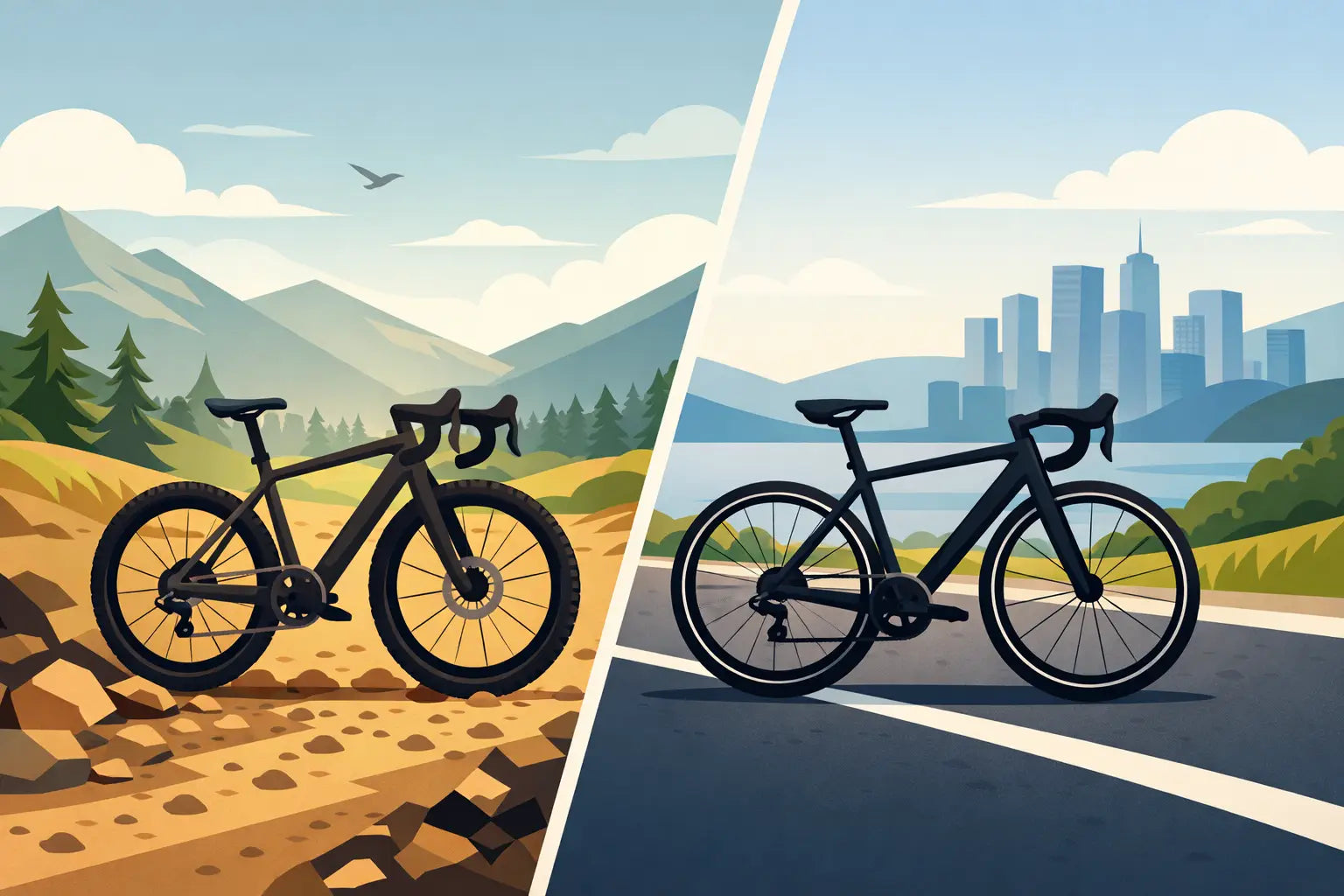
You can feel the difference within the first ten minutes. On a smooth stretch of tarmac, a road bike feels sharp and eager, almost impatient. Turn onto rougher surfaces, broken paths or patchy shoulders, and a gravel bike starts to make a lot more sense.
That is why the gravel bike vs road bike question is not really about which bike is better. It is about where you ride, how you want the bike to feel, and what compromises you are happy to live with. For many riders, especially those buying a first serious bike, the wrong choice is not buying too cheap. It is buying a bike that does not suit the riding they actually do.
Gravel bike vs road bike: the core difference
At a glance, gravel and road bikes can look similar. Both usually have drop handlebars, lightweight frames and a riding position built for efficiency. But the setup and intention are different.
A road bike is built for speed on paved roads. It rewards smooth pedalling, clean lines through corners and fast group rides. Geometry tends to be more aggressive, tyres are narrower, and the overall feel is quicker and more direct.
A gravel bike is built for mixed surfaces. It is designed to stay composed when the road quality gets worse, when the route includes park connectors, rough tarmac, hard-packed trails or long stretches of imperfect ground. The geometry is usually a bit more stable, tyre clearance is wider, and comfort becomes a bigger part of the package.
That does not mean a gravel bike is slow or a road bike is uncomfortable. It means each one starts from a different priority.
How a road bike feels on the ride
If your main aim is pace, a road bike still has a clear edge. It accelerates faster, carries speed more easily and generally feels more lively under hard efforts. On long paved rides, that efficiency matters. You put power down and the bike answers immediately.
This is one reason experienced riders still choose road bikes for training, bunch rides and sportive-style riding. If you are comparing builds with Shimano 105 or Ultegra-level components, the road bike often feels more focused because the frame, wheels and tyres are all working towards the same goal - speed on smooth surfaces.
The trade-off is that road bikes can feel harsher when the surface is poor. Even with modern tyre widths and more forgiving frame designs, a road bike still prefers good tarmac. If most of your local routes include cracked shoulders, uneven lanes or sections where you need to leave the road entirely, the ride can become more tiring than it needs to be.
How a gravel bike feels on the ride
A gravel bike gives away some of that sharp road-bike urgency, but in return you get versatility and confidence. The wider tyres help absorb chatter from rough roads. The handling is often calmer, which many newer riders appreciate straight away. You do not need to be on perfect surfaces to enjoy the ride.
For riders who want one bike for fitness rides, casual exploring and weekday practicality, gravel bikes are easy to understand. They can cover road miles well enough, but they are also happy rolling over rougher surfaces without feeling fragile or nervous.
That flexibility matters in real-world riding. You may start out planning only road use, then realise you want a bike that can handle canal-style paths, park connectors, imperfect industrial roads or weekend detours. A gravel bike leaves more room for that kind of riding without demanding a second bike later.
Tyres, gearing and geometry matter more than labels
When comparing gravel bike vs road bike options, many riders focus only on the category name. In practice, the details matter just as much.
Tyres are the biggest example. A road bike with modern endurance geometry and slightly wider tyres can be surprisingly comfortable. A gravel bike fitted with smoother, faster-rolling tyres can feel very efficient on the road. That is why two bikes from different categories can overlap more than people expect.
Gearing also changes the experience. Gravel bikes often use lower gearing to make climbing and rough-surface riding easier. That is useful if your route is varied or if you prefer a more forgiving setup. Road bikes usually prioritise tighter gear spacing and higher top-end speed, which suits faster road efforts.
Geometry is the final piece. A racier road bike may put you in a lower, more stretched position. Great for speed, less ideal if your flexibility is limited or if comfort matters more than aero gains. Gravel geometry is often more upright and stable, which can reduce fatigue over longer mixed-surface rides.
Which bike makes more sense in Singapore?
Local riding conditions make this comparison more practical than theoretical. If your routes are mainly smooth roads, regular training loops and faster weekend group rides, a road bike is the cleaner choice. It is more specialised, but if you ride mostly on tarmac, that specialisation pays off.
If your riding is mixed, gravel becomes very attractive. Many riders want one bike that can commute during the week, handle less-than-perfect surfaces confidently, and still feel enjoyable on longer weekend rides. In that case, the extra tyre clearance and more forgiving ride quality are hard to ignore.
Weather and road condition also matter. Sudden rain, debris, rough edges and variable surfaces can make a slightly more stable bike feel like the smarter everyday option. That does not mean everyone needs gravel. It means daily usability should carry real weight when you choose.
Who should buy a road bike?
A road bike suits riders who know they want performance on paved roads first. If you enjoy building speed, joining faster social rides, improving average pace or simply like the responsive feel of a bike that urges you forward, road is probably the right lane.
It also makes sense for riders who already have clear habits. If nearly every ride starts on tarmac and stays there, a gravel bike may add capability you never use. In that situation, the extra tyre clearance and more relaxed geometry can feel like unnecessary compromise.
For buyers looking at carbon performance models from brands such as Java or Sava, this matters even more. Once you start paying for lighter frames and stronger road-focused component packages, you want a bike that matches the riding you actually do.
Who should buy a gravel bike?
A gravel bike suits riders who value freedom more than outright pace. If you want fewer restrictions on where you can go, if comfort matters, or if you are not fully sure what kind of riding you will settle into, gravel is often the safer long-term choice.
It is also a strong option for riders upgrading from casual or hybrid bikes who still want drop bars and efficient handling, but without the sharper edge of a road race bike. The learning curve can feel friendlier. You still get a sporty ride, just with more tolerance for rougher surfaces and less-than-perfect route planning.
For practical riders, gravel also tends to play well with accessories. Many models have better clearance for larger tyres, room for bags and a more adaptable setup. That can matter if your bike needs to do more than one job.
The mistake many first-time buyers make
The most common mistake is choosing based on aspiration alone. Riders picture themselves in fast road kits, flying down smooth roads, and buy a road bike even though their real routine is shorter spins, mixed surfaces and everyday comfort. Others buy gravel because it sounds more versatile, then spend all their time on clean tarmac wishing the bike felt a touch quicker.
A better way to decide is brutally simple. Think about where 80 per cent of your riding will happen over the next year. Not the dream route. The real one.
Then think about what bothers you more. Do you hate feeling slow on smooth roads, or do you hate feeling beaten up on rougher ones? Your answer usually points to the right category faster than any spec sheet.
One bike, two directions
There is plenty of overlap now, which is good news for buyers. Modern road bikes are more comfortable than they used to be. Modern gravel bikes are faster than many people expect, especially with quality tyres from brands like Continental or Schwalbe and a well-chosen wheelset.
That means the right shop setup matters. Tyre choice, saddle position, reach, and drivetrain selection can change the ride more than many riders realise. A properly fitted bike with sensible components will almost always feel better than a more expensive bike in the wrong category. That is why getting clear advice before buying is worth it, especially if you want one bike to cover several uses. If you are comparing options, Gcycle can help narrow the choice based on your routes, fit and long-term servicing needs.
Choose the bike that makes you want to ride more often, not the one that only sounds good on paper.