Cart
0
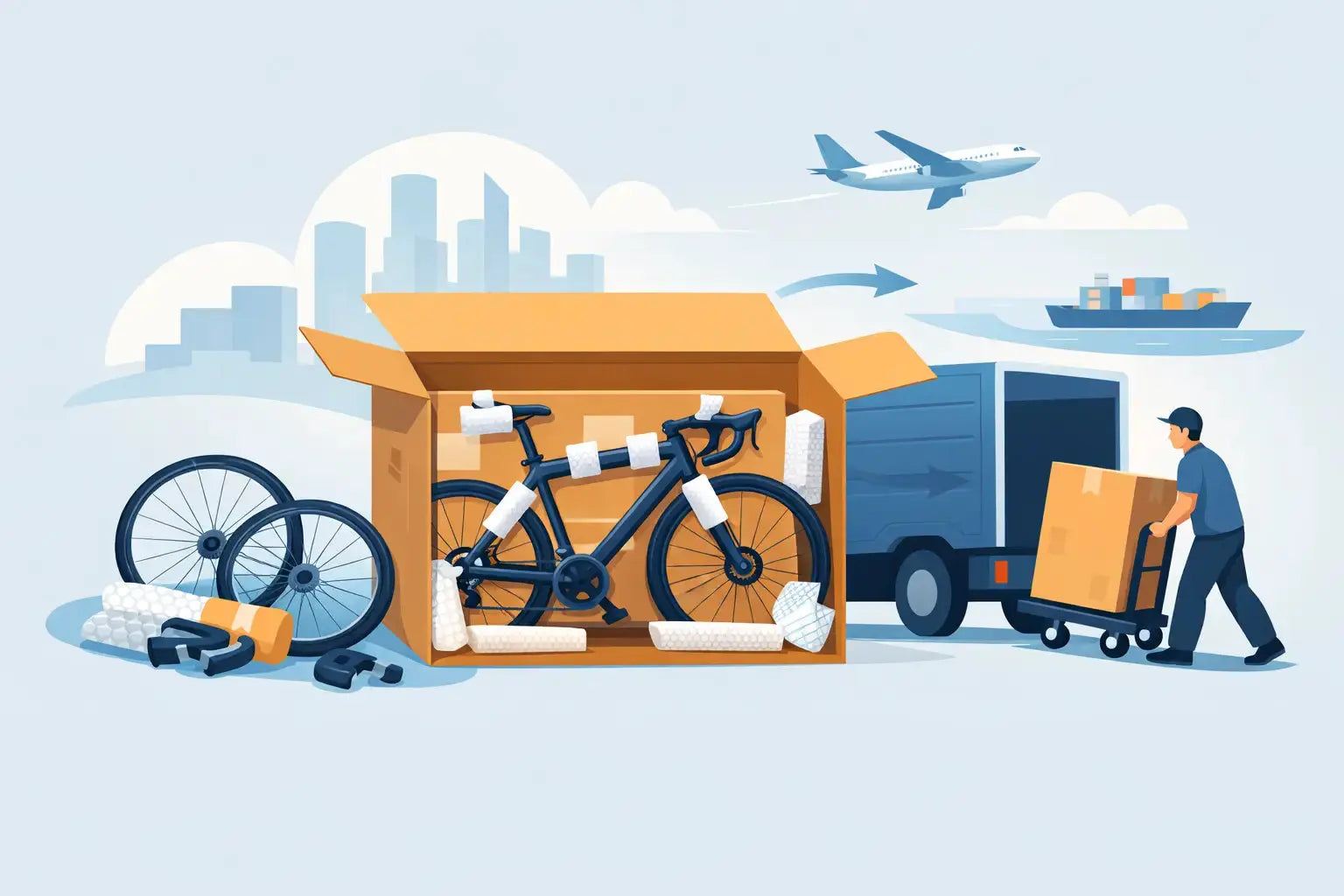
Shipping a bike goes wrong in very predictable ways. A rear derailleur gets bent because it was left exposed. A fork leg gets scratched because the front wheel was not secured. A carbon frame arrives with rub marks because the padding shifted halfway through transit.
If you want to know how to ship a bike safely, the goal is not just getting it into a box. The goal is controlling movement, protecting pressure points, and making reassembly straightforward at the other end. Whether you are sending a foldable for a sale, a road bike for an event, or a mountain bike to a workshop, careful packing matters more than luck.
How to ship a bike safely from the start
The safest bike shipment starts before you touch a spanner. First, clean the bike well enough to see the frame, fork, rims and drivetrain clearly. Dirt hides cracks, chips and dents, and you do not want to discover existing damage only after a delivery dispute starts.
Take clear photos from all sides, plus close-ups of the drivetrain, wheels, cockpit and any existing marks. This takes a few minutes and gives you a record of the bike’s condition before packing. If the bike has premium parts such as Shimano groupsets, carbon wheels or upgraded LitePro components, detailed photos are even more useful.
Then think about where the risk actually is. The most vulnerable areas are usually the rear derailleur, the fork ends, the disc rotors, the dropouts, the frame tubes where parts can rub, and anything that can shift inside the box. Many people focus on wrapping every tube heavily, but movement inside the carton is often the bigger problem.
Choose the right box and packing materials
A proper bike box is still the best option. A carton designed for bicycles gives you better dimensions, better support and fewer awkward gaps than a generic moving box. If you can get the original bike box, that is ideal. If not, use a strong double-wall bicycle carton in good condition.
You will also want foam tubing or pipe insulation, bubble wrap, zip ties, strong packing tape, cardboard spacers, and something to protect the dropouts. Wheel bags are useful but not essential if the wheels are wrapped properly. For disc brake bikes, rotor covers help prevent bending. For rim brake bikes, general wheel padding is often enough.
It is tempting to save money on materials, but this is one of those jobs where cheap tape and thin cardboard create expensive problems. If the bike is a higher-value model such as a carbon road bike from Sava or a gravel bike with quality Shimano components, better packaging is a sensible investment.
Disassemble only what you need
A common mistake is taking too much apart. The more pieces you remove, the more chances there are to lose small parts, cross-thread pedals, or reassemble something incorrectly. For most bikes, you only need to remove the pedals, front wheel, and sometimes the handlebar or seatpost depending on box size.
Shift the chain onto the small chainring and one of the smaller cassette sprockets before packing. This helps reduce derailleur tension and keeps the drivetrain in a safer position. Remove the pedals carefully, remembering that the left pedal has a reverse thread.
For many road, gravel and hybrid bikes, turning or removing the handlebar is enough. Wrap it separately and secure it so it cannot swing against the top tube. On foldable bikes such as Dahon, Tern, Fnhon or Crius models, the process may be easier because the frame compacts naturally, but hinges and folded contact points still need protection. A folded bike is smaller, not automatically safer.
If the bike has disc brakes, remove the rotors only if you are comfortable doing so. It can reduce the chance of bends, but poor reinstallation can cause brake rub later. If you leave them on, make sure they are well shielded and cannot take a direct hit.
Protect the critical parts properly
This is where most of the safety comes from. Start with the rear derailleur. If possible, remove it from the hanger and wrap it, while leaving the cable attached. Then secure it inside the rear triangle so it is not hanging loose. If you do not remove it, protect it heavily and make sure nothing can press on that side of the box.
Install dropout spacers if you have them. These are especially useful for bikes with thru-axles or quick-release wheels removed, because they help the fork and rear triangle keep their shape if the box is compressed. If you are shipping a carbon frame, this step matters even more.
Wrap the frame tubes individually with foam or protective sleeves. Pay attention to places where parts may touch during transport, such as the crank against the chainstay, the handlebar against the top tube, or the fork crown near the down tube. Even high-quality tyres from Schwalbe or Continental can leave rub marks if they move repeatedly against painted surfaces.
Secure the chain so it does not slap around inside the box. A simple wrap around the chainstay and chain can prevent chipped paint. If you remove the seatpost, mark the saddle height first with tape so setup is quicker later.
Pack the wheels so they do not become the problem
Wheels are large, awkward and capable of damaging the rest of the bike if they shift. Wrap each wheel separately. If the tyres are inflated, let a little air out, but do not fully deflate unless your courier requires it. A modest reduction is usually enough.
Place a layer of cardboard on each side of the wheel, especially if it has a disc rotor or deep-section rim. If the cassette is still on a removed rear wheel, protect that side as well so it does not gouge the frame or puncture packing material.
Inside the box, wheels should sit flat and be tied or braced so they cannot slide across the frame. A box can be dropped, turned sideways or stacked under load. If the wheel can move an inch in your hands, it can move much more in transit.
How to ship a bike safely with less movement in the box
Once everything is wrapped, the next job is arranging the bike so the carton works for you rather than against you. The frame should sit in a stable position, with the heaviest parts supported and no sharp point pressing directly into the box wall.
Use zip ties to secure loose components to the frame or internal cardboard supports. Fill empty spaces with padding, but do not overpack to the point where pressure is forced onto delicate parts. Good packing feels snug, not crushed.
Before sealing the box, give it a gentle shake. You should not hear components knocking into each other or feel obvious shifting. If something moves, fix that now. The safest-looking box in the world is still risky if the bike can rattle around for several hundred kilometres.
Label small removed parts clearly. Pedals, axles, computer mounts and tools should go in a sealed bag and then be secured inside the box, not left loose. Reassembly becomes much easier when every part is where it should be.
Picking a courier and level of cover
Packing well is half the job. The other half is choosing a service that actually handles large, fragile items sensibly. Some couriers are better set up for bulky parcels, while others treat bike boxes like any ordinary carton. That difference matters.
Check the weight and size limits before booking. Measure the packed box accurately and declare the value honestly. If insurance or compensation cover is available, read the wording carefully. Some services exclude damage if the item was not packed to their standard, which is another reason to be thorough.
If you are shipping a bike with expensive upgrades, it is worth choosing more reliable cover even if it costs more. Saving a small amount on delivery is not much comfort if you end up replacing a hanger, derailleur or wheel.
If you need help with packing advice, component choices or a bike that is ready for safe setup and long-term reliability, Gcycle offers support through both its online store and physical shop at https://gcyclesg.com.
Final checks before it leaves
Seal every edge of the carton properly, then add clear shipping labels and any orientation labels you think may help. Do not rely on stickers alone to guarantee careful handling, but clear labelling still improves the odds.
Keep your photos, measurements and booking details until the bike arrives and is checked. Ask the receiver to inspect the box before opening if possible, and to photograph any obvious external damage straight away.
A well-packed bike usually arrives exactly as it left - ready for a quick rebuild, a safety check and the next ride. That extra half hour spent packing carefully is often the difference between a smooth delivery and a repair bill you did not need.