Cart
0
If you have been comparing road bikes and keep seeing Ultegra Di2 in the spec list, you are looking at one of the biggest jump points in how a bike feels on the road. Not faster in the marketing sense. Faster in the way the shift happens when you are under pressure, climbing hard, or trying to keep the bike settled through rolling terrain.
For many riders, the real question is not just what is Ultegra Di2. It is whether it changes the ride enough to justify the cost. That depends on how often you ride, what annoys you about mechanical shifting, and how much you value a clean, consistent drivetrain.
What is Ultegra Di2?
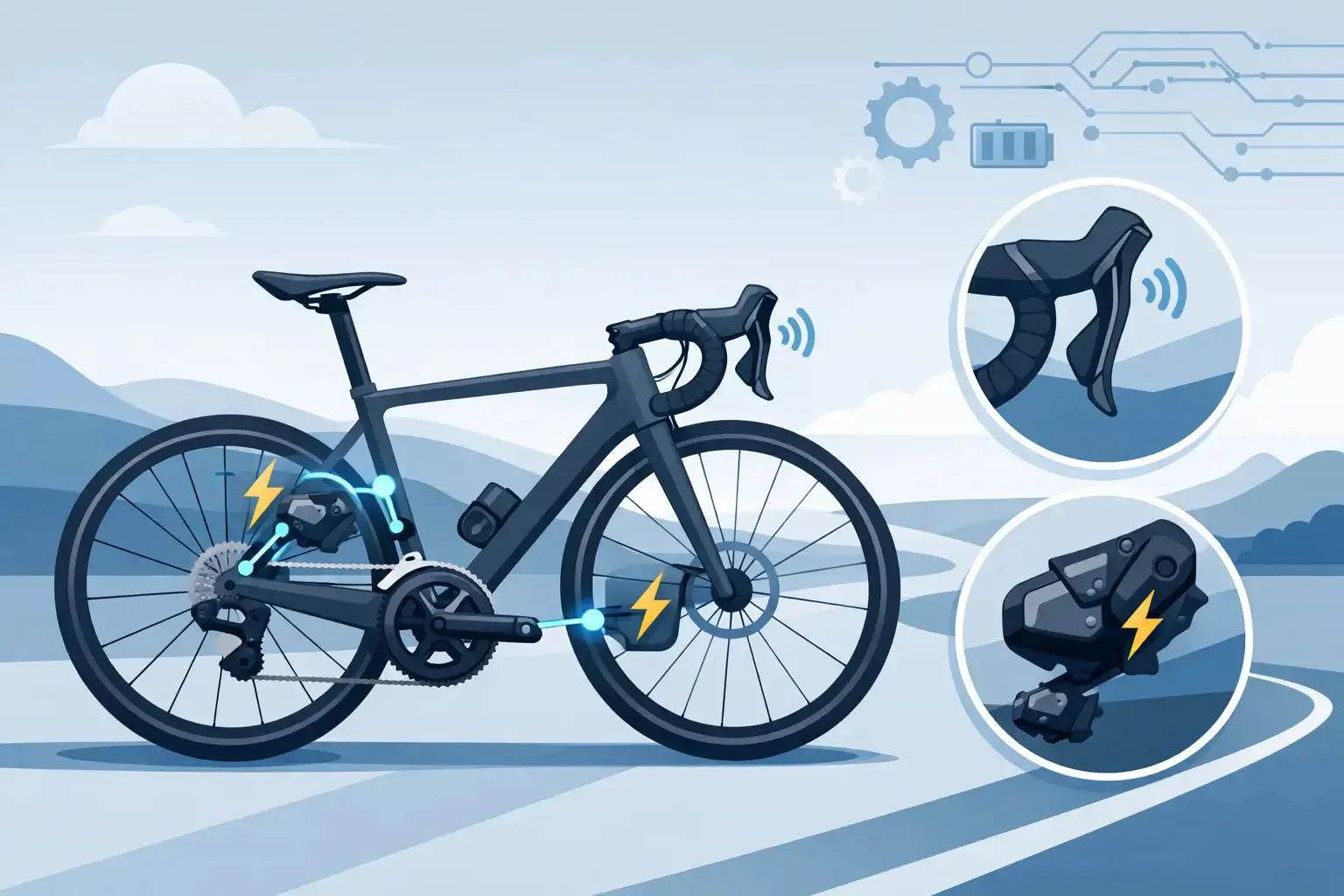
Ultegra Di2 is Shimano's electronic road bike groupset in the Ultegra tier. Instead of using traditional steel cables to move the derailleurs when you press the shifters, it uses electronic switches and battery-powered motors.
In simple terms, you press a button at the lever and the front or rear derailleur moves electronically. The result is a very precise shift with less dependence on cable tension, cable stretch, or friction in the housing.
Ultegra sits above Shimano 105 and below Dura-Ace in the road range. Di2 is the electronic version. So when riders ask what is Ultegra Di2, the short answer is this: it is a high-performance Shimano electronic shifting system designed for road riding, often found on serious enthusiast bikes and race-ready builds.
How Ultegra Di2 works on the bike
The shift levers look familiar, but they are not pulling a cable in the usual way. Each button press sends an electronic signal to the derailleurs. A rechargeable battery powers the system, and the derailleurs move the chain into the next gear.
Modern Ultegra Di2 setups are known for quick rear shifts and very dependable front shifting. That matters more than many riders expect. Front shifting under load has always been one of the weak spots on lower-end or poorly adjusted drivetrains. Di2 reduces that fuss.
The system can also include features such as semi-synchronised or full synchronised shifting, depending on setup. That means the bike can automatically adjust the front and rear derailleurs together to keep gear changes smoother. Some riders love this because it simplifies gear choice. Others prefer full manual control. It is one of those features that comes down to riding style.
Why riders notice the difference straight away
The biggest difference is consistency. With a mechanical groupset, shifting quality can change over time as cables wear, housing gets contaminated, or adjustment drifts. With Ultegra Di2, the shift feel tends to stay very stable once the bike is properly set up.
That is especially useful for riders who do long weekend miles, climbing routes, or fast group rides where delayed shifting is more than a minor irritation. Press the button and the shift happens. There is less hesitation and less need to trim or second-guess the front derailleur.
Another difference is lever effort. Mechanical shifting usually asks for a firmer push, particularly on the front shift. Di2 needs very little force. On a long ride, that lighter action can feel noticeably more refined.
Then there is the cockpit feel. Many riders like the clean setup and the crisp button response. It gives the bike a more modern character, especially on carbon road bikes where buyers already expect a premium ride experience.
Ultegra Di2 versus mechanical Ultegra
Mechanical Ultegra is still an excellent groupset. It shifts well, lasts well, and remains a sensible choice for riders who want strong performance without depending on a battery.
Ultegra Di2 improves on it in precision and repeatability. You are less likely to deal with cable stretch, awkward front shifting, or a drivetrain that feels slightly off after some use. For riders who are sensitive to bike feel, that difference is obvious.
But mechanical does have advantages. It is simpler, usually cheaper to buy, and some riders prefer its direct, tactile feel. If you travel often with your bike, or you like a system that can be serviced in a very traditional way, mechanical still makes sense.
So the answer is not that Di2 is automatically better for everyone. It is better for riders who want premium shifting performance and are happy to pay for it.
Where Ultegra Di2 sits in Shimano's range
Shimano's road hierarchy is broadly Tiagra, 105, Ultegra, and Dura-Ace. Ultegra is the performance sweet spot for many serious riders. It gives you much of the top-end function without reaching flagship prices.
That is why Ultegra Di2 is so common on mid to high-end road bikes. It hits a balance that appeals to enthusiasts who ride hard, care about clean shifting, and still want sensible value.
Compared with 105 Di2, Ultegra Di2 is lighter and a bit more premium in finish and feel. Compared with Dura-Ace Di2, it is typically the more realistic choice for riders paying with their own money rather than chasing every last gram.
Is Ultegra Di2 only for racers?
Not at all. Racers benefit from fast, accurate shifting under load, but plenty of non-racers enjoy Ultegra Di2 just as much.
If you ride for fitness, join fast club rides, or simply want a road bike that feels sharp every time you head out, Di2 can be worth it. It is also attractive to riders upgrading from an entry-level aluminium bike to a more serious carbon road bike and wanting a complete step up in ride quality.
For newer riders, the value depends on budget. If Ultegra Di2 means compromising badly on wheelset quality, tyre choice, or bike fit, then it may not be the smartest place to spend. A well-fitted bike with good tyres and a properly set-up Shimano 105 drivetrain can be the better real-world purchase.
The main trade-offs to know before buying
The first trade-off is price. Ultegra Di2 bikes cost more than comparable mechanical builds, and that matters. If you are building towards your first proper road bike, the jump can be significant.
The second is charging. The battery lasts a long time, and for most riders this is not a weekly chore. Still, it is one more thing to monitor. If you dislike the idea of charging your bike components at all, mechanical may suit you better.
The third is crash and replacement cost. Electronic parts are usually more expensive to replace than cable-actuated equivalents. For riders doing serious mileage, racing, or travelling regularly with the bike, that is worth factoring in.
The final point is servicing. Di2 is dependable, but proper setup still matters. Firmware updates, adjustment, crash recovery, and diagnosis are best handled by a workshop familiar with Shimano components. That is not a drawback so much as a reminder that premium parts deserve proper support.
What Ultegra Di2 feels like in real riding
On flatter roads, the system feels smooth and immediate. On climbs, it helps most when you need to shift while staying seated and keeping power on the pedals. In rolling terrain, where you are moving through the cassette constantly, the accuracy becomes even more noticeable.
You also tend to hear and feel less drivetrain fuss when the bike is well tuned. That does not mean the system is silent all the time, but it usually feels cleaner than a mechanical drivetrain that is starting to drift out of adjustment.
For riders in Singapore, where many road cyclists combine early morning fitness rides with stop-start urban sections before reaching open roads, dependable shifting can be especially useful. The bike simply responds quickly whether you are accelerating away from lights or settling into a steady tempo.
Is Ultegra Di2 worth it?
If you ride often, care about shift quality, and are already shopping in the mid to upper range of road bikes, Ultegra Di2 is easy to appreciate. It makes the bike feel more polished and less fussy over time.
If your budget is tighter, the answer becomes more conditional. You may get better overall value from a bike with Shimano 105, quality wheels, and money left for a proper fit, pedals, helmet, and servicing. The best bike is not always the one with the fanciest groupset. It is the one that suits your riding and gets used consistently.
At Gcycle, this is usually the practical conversation riders need. Not whether Ultegra Di2 is impressive - it is - but whether it is the right upgrade for the type of riding you actually do.
Who should seriously consider Ultegra Di2
It makes strong sense for experienced road riders, committed fitness cyclists, and enthusiasts moving into a performance-focused bike from brands such as Giant, Merida, Java or Sava. It also suits riders who are particular about drivetrain feel and want a bike that stays crisp with less ongoing adjustment than a cable system.
If you mainly commute casually, ride short distances, or prioritise price above all else, Ultegra Di2 may be more luxury than necessity. There is nothing wrong with that. A well-maintained Shimano mechanical setup remains very good.
Still, once you have ridden a bike with a properly dialled Ultegra Di2 system, it is easy to see why so many riders stay with electronic shifting. The bike feels ready every time. And when your equipment disappears beneath you and lets you focus on the ride, that is usually money well spent.
If you are comparing bikes, think beyond the badge. Consider fit, wheel quality, tyres, and after-sales support too. The right groupset should make the bike better for your riding, not just better on paper.