Cart
0
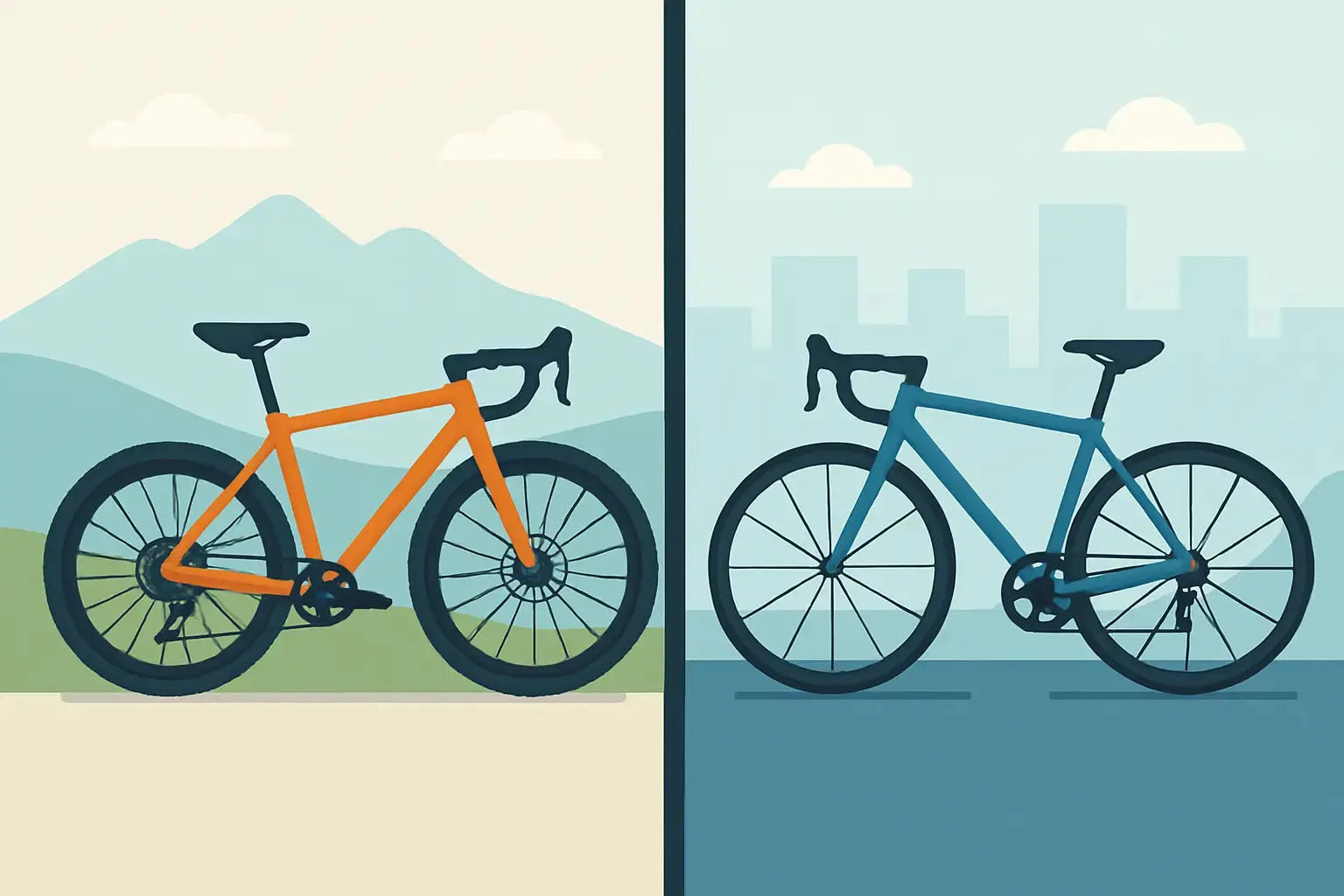
You are 20 minutes into a ride and the route looks perfect on the map - until the tarmac ends. Ahead is a stretch of compacted path, a bit of broken road edge, and that loose gravel shoulder you usually avoid. If you are on a pure road bike, you are likely tip-toeing, braking, and thinking about pinch flats. If you are on a gravel bike, you probably just keep rolling.
That moment is the real difference in the gravel bike vs road bike decision. It is not about which one is “better”. It is about how much uncertainty you want your bike to handle without drama, and how much of your riding is about going fast on smooth roads.
Gravel bike vs road bike: the real-world difference
A road bike is built to be efficient on tarmac: quick acceleration, sharp handling, and a riding position that encourages speed. A gravel bike borrows the same drop-bar DNA but adds stability, tyre clearance, and gearing choices that make mixed surfaces feel normal.In practice, the road bike feels lively and direct, especially when you stand up to climb or sprint. The gravel bike feels calmer - slightly less reactive - but far more forgiving when the road surface gets rough, wet, or unpredictable.
If your rides are almost always smooth roads and you care about pace, a road bike will reward you every time you pedal. If your rides often include park connectors, towpaths, light trails, or simply poor road surfaces, a gravel bike gives you freedom and confidence.
Speed: where road bikes still win
On clean tarmac, a road bike is typically faster for the same effort. A large part of that comes from tyres and riding position. Road bikes usually run narrower slick tyres at higher pressures, reducing rolling resistance and keeping steering crisp. Frames also tend to be a touch stiffer and more aerodynamic.A gravel bike can be fast, especially with faster-rolling tyres, but it is usually carrying extra tyre volume and a geometry aimed at stability. That costs a little speed at the top end. The trade-off is that on rough roads, the gravel bike can feel faster because you can stay seated, maintain traction, and stop braking for every patch of broken surface.
If you enjoy chasing personal bests on road loops and group rides where pace matters, a road bike makes it easier. If your “average speed” is often dictated by surface quality, a gravel bike may end up being the more efficient option over the whole ride.
Comfort and control: tyres do the heavy lifting
Tyres are the headline difference you feel on day one. Road bikes commonly sit around 25-28 mm tyres (some modern road bikes take wider), while gravel bikes often start around 35-45 mm depending on the frame. Wider tyres run at lower pressures, which smooths out chatter, reduces fatigue, and improves grip.On wet roads or dusty corners, that extra contact patch can be the difference between feeling in control and feeling tense. For newer riders, this matters more than marginal speed gains.
The other comfort piece is handling. Gravel bikes tend to have a longer wheelbase and more stable steering. It is easier to hold a line on loose surfaces and less twitchy when you hit potholes or road seams.
Gearing: climbing, headwinds, and loaded rides
Road bikes often come with gearing designed around speed on the flat and steady climbs. Many are set up with 2x drivetrains (two chainrings) to provide closely spaced gears, which is great for keeping cadence steady in a fast group.Gravel bikes frequently use wider-range gearing, either 2x with a smaller inner ring or 1x (single chainring) for simplicity. If you ride steep ramps, carry a bag, or want to spin rather than grind, gravel gearing can feel friendlier.
This is also where component choice matters. Riders comparing Shimano groupsets will notice that Shimano 105 and Ultegra are common on road builds, while Shimano GRX is designed for gravel use with clutch derailleurs for chain stability and gearing that suits mixed terrain.
If your riding is mainly flat, you may appreciate the smaller jumps between gears on a road setup. If your routes include short sharp climbs, stop-start sections, or you simply prefer easier climbing gears, gravel gearing is often the safer bet.
Frame geometry: position and confidence
Road bikes generally put you in a more stretched, lower position. That helps with aerodynamics and power transfer, but it can be demanding if your flexibility is not there yet, or if you are riding longer hours.Gravel bikes usually have a slightly higher front end and a more relaxed reach. That opens your chest for breathing, takes pressure off hands, and makes it easier to look ahead when surfaces change. The result is not “upright like a hybrid”, but it is less aggressive than a race-focused road bike.
A key point: you can often adjust fit on either bike with stem length, bar height, and saddle position. But if you already know you want comfort and control first, starting with a gravel geometry is a sensible move.
Tyre clearance and versatility
Tyre clearance is what turns a bike into a tool rather than a limitation. A gravel frame is built to accept larger tyres, sometimes with room for mudguards as well. That means you can run a fast semi-slick for more road riding, then switch to a more aggressive tread when you want traction.A road bike with tight clearances may be locked into narrower tyres. Many modern road bikes now take 30-32 mm tyres, which improves comfort a lot, but they still will not match a gravel bike’s ability to float over loose surfaces.
If you want one bike to cover commuting, fitness rides, and the occasional off-road shortcut, tyre clearance is your friend.
Brakes and stopping power
Most new road and gravel bikes are on disc brakes. The difference is less about whether they stop and more about how consistently they stop in wet conditions and on variable surfaces.For mixed terrain, discs are a practical advantage. You are less likely to lose braking confidence in the rain, and wider tyres with discs create a calm, predictable feel. If you are looking at older rim-brake road bikes, they can still be excellent on dry roads, but they are less forgiving in heavy weather and with wider tyres.
What should you buy if you only want one bike?
This is where the gravel bike often wins on value. Not because it is “better”, but because it covers more riding scenarios with fewer compromises. With the right tyres, a gravel bike can do weekday commutes, weekend endurance rides, and light off-road exploration without feeling out of place.A road bike is the right choice if you are committed to road-only riding, you want that sharp, fast feel, and you will actually use it the way it is designed. Many people buy a road bike for speed, then end up avoiding it when road conditions or routes are less than perfect.
If you are unsure, choose the bike that you will ride more often. Consistency beats specification.
Common Singapore-style scenarios (and what fits)
If your route includes a mix of good tarmac, rough edges, and occasional path connectors, a gravel bike’s comfort and grip make daily riding simpler. If your goal is faster group rides on smooth roads, a road bike makes it easier to hold wheels and respond to surges.If you are also thinking about carrying kit - a change of clothes, tools, or a small bag - gravel bikes usually offer more mounting options and a more stable feel when loaded.
Components and setup that matter more than the label
“Gravel” and “road” are categories, but your actual experience is shaped by setup.Tyres are the biggest lever. A gravel bike on faster-rolling tyres can feel surprisingly close to a road bike for everyday riding. Likewise, a road bike with wider tyres (if clearance allows) can become far more comfortable.
Drivetrain reliability matters too. A well-adjusted Shimano drivetrain, whether it is 105, Ultegra, or GRX, will shift cleanly and last longer with proper servicing. Tyres from known brands like Continental or Schwalbe are also worth prioritising for predictable grip and puncture resistance.
Finally, fit is non-negotiable. The fastest bike on paper becomes the slowest bike if it hurts your back, numbs your hands, or forces you to ride tense.
Choosing confidently: a simple way to decide
If you are still stuck between the two, focus on your next 10 rides. If at least three of them include questionable surfaces, wet conditions, or routes where you might take a shortcut off the main road, a gravel bike is the safer long-term choice. If nearly all of them are smooth tarmac and you care about speed and group-ride performance, pick the road bike and enjoy what it does best.And if you want a practical shortcut: a gravel bike is often the better first drop-bar bike because it is forgiving while you build fitness and handling skills.
If you want help narrowing down options by budget, sizing, and intended routes, Gcycle can guide you through fit and setup so your bike arrives ready to ride with confidence - not just assembled.
The best choice is the one that makes you look at a route with mixed surfaces and think, “Yes, let’s go and see where that leads.”