Cart
0
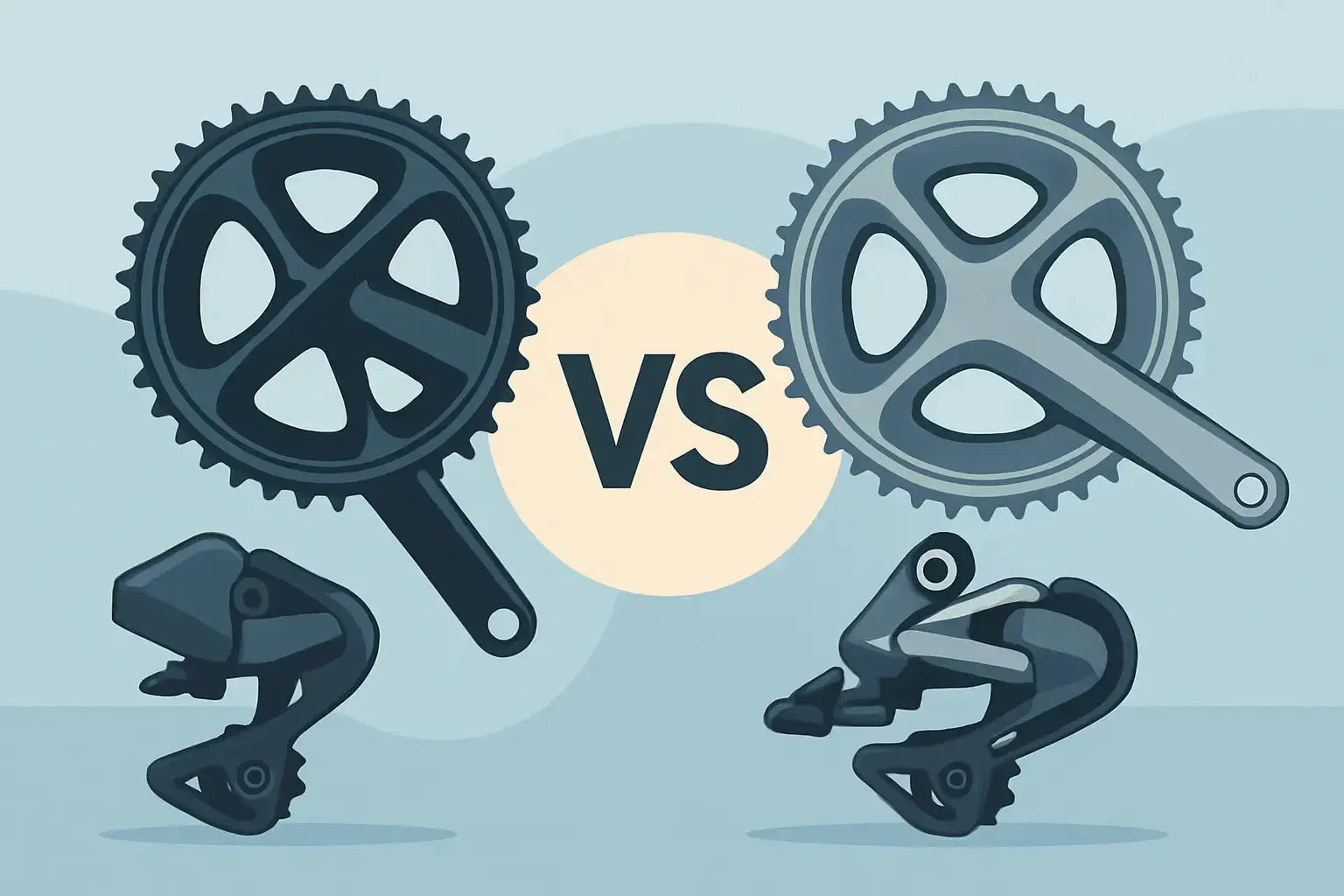
You’re halfway through a long ride, the road tips up, and you click down the cassette. The shift happens - or it hesitates. That tiny moment is why riders compare Shimano’s mid-range and race-leaning groupsets so obsessively. It’s not about badges. It’s about how your bike feels when you’re tired, sweaty, and asking it to behave.
This is a practical look at the shimano 105 vs ultegra differences that actually matter when you’re buying a road bike, upgrading a build, or choosing your next groupset. No myth-making, no spec-sheet worship - just what changes, who will notice, and where the money goes.
Shimano 105 vs Ultegra differences at a glance
Both 105 and Ultegra sit in Shimano’s performance road line-up. They share the same basic job: crisp shifting, predictable braking, and reliable day-in, day-out riding. The key separation is that 105 is designed to hit a value sweet spot, while Ultegra is designed to feel closer to pro-level Dura-Ace, mostly through weight savings and higher-end finishing.In real terms, 105 is the groupset that makes sense for most riders who want performance without preciousness. Ultegra is for riders who care about the last bit of refinement, want a lighter bike, or simply want the “best sensible option” before going full race-spec.
Shifting feel: it’s closer than you think
For mechanical (cable) shifting, modern 105 and Ultegra are both excellent. The biggest misconception is that 105 shifts “worse”. Set up properly with fresh cables and clean housing, 105 can shift with the same accuracy you’d expect from Ultegra.Where Ultegra tends to edge ahead is in the feel at the lever - a slightly lighter action, a more “snapped” engagement, and a touch more polish under load. It’s subtle. Some riders will swear they feel it instantly; others won’t notice until they ride the two bikes back-to-back.
The more meaningful difference often comes down to maintenance. A well-adjusted 105 drivetrain will outperform a poorly set up Ultegra one every time. If you ride in wet conditions, sweat heavily on indoor trainers, or do lots of commuting miles, spending money on regular servicing and timely replacements can deliver more performance than upgrading the logo.
Di2 (electronic shifting): feature gaps are narrowing
If you’re comparing electronic versions, the conversation changes. Ultegra Di2 has historically been the trickle-down of Shimano’s top-end electronic tech, and 105 Di2 arrived to bring electronic shifting to more riders at a more realistic price.The important point: both deliver the core Di2 experience - consistent shifting, no cable stretch, and the ability to shift under load with impressive reliability. The “gap” is more about materials, weight, and sometimes button and hood ergonomics depending on the generation.
If you want Di2 mainly for convenience and consistency, 105 Di2 is already a very strong proposition. If you want a lighter build and a more premium finish, Ultegra Di2 is where riders usually land.
Weight: the most measurable difference (and the easiest to overpay for)
If you’re buying Ultegra, you’re usually buying grams.Ultegra parts commonly use more advanced forging, machining, and higher-grade finishes. Across a full groupset, that can mean a few hundred grams saved compared to 105, depending on exact model year and whether you’re comparing mechanical or Di2.
Will you feel it? Sometimes.
On a climb, weight matters most when it’s rotating (wheels and tyres) or when you’re repeatedly accelerating. A lighter groupset helps, but it’s rarely the first place we’d spend for speed. If your wheels are basic and your tyres are heavy, upgrading those can transform your ride more than swapping 105 for Ultegra.
That said, weight is still weight. If you’re building a bike with a target number in mind, or you simply enjoy a lighter, livelier feel, Ultegra is the easier way to drop grams without compromising durability.
Braking: power is similar, control is the point
For rim brakes, both 105 and Ultegra calipers can deliver strong stopping power with good pads and correct set-up. The bigger modern conversation is disc.With hydraulic disc brakes, 105 and Ultegra share a lot of Shimano’s braking DNA: dependable bite point, strong power, and modulation that feels predictable once you’re used to it. Ultegra may offer a slightly more refined lever feel and, in some generations, a bit of extra attention to heat management and finishing.
But the real-world braking difference many riders notice isn’t 105 vs Ultegra - it’s rotor size, pad compound, and how well the system is bled and aligned. A properly bled 105 hydraulic set-up with quality rotors will inspire far more confidence than a neglected Ultegra system that squeals and rubs.
Durability and running costs: 105 often wins the long game
Here’s where 105 quietly becomes the smart choice.105 parts are typically a little heavier and a little less exotic, and that can translate into excellent longevity. Chains, cassettes, and chainrings are wear items no matter what you buy, but when you’re clocking serious mileage, replacement costs start to matter.
Ultegra consumables usually cost more. If you’re riding frequently - especially in gritty, wet, or salty conditions - you may find yourself replacing drivetrain parts often enough that the price difference becomes noticeable over a year.
A common “best of both” approach for high-mileage riders is to run a 105-level cassette and chain for value, and spend on the contact points and performance upgrades that change feel more: tyres, wheels, and a great bike fit.
Materials and finish: what you’re paying for
Ultegra tends to look and feel more premium in your hands. The surface finishing, the crispness of details, and the way components wear cosmetically can be nicer. 105 is more utilitarian - still well made, just less jewellery-like.If your bike is a long-term keeper and you enjoy that higher-end feel every time you roll it out, Ultegra can be satisfying in a way that’s hard to quantify in watts. If you value “fit for purpose” more than “finish for pride”, 105 is hard to fault.
Gear range and compatibility: check the specifics, not the name
One trap in the 105 vs Ultegra debate is assuming either one automatically gives you the ratios you want.What really matters is the cassette range (for example, a wider-range cassette for steeper climbs), the chainset option (compact vs mid-compact), and rear derailleur capacity. Depending on the generation, you may have more or fewer official options.
If you’re riding mixed terrain, doing sportives with steep ramps, or you simply prefer higher cadence, prioritise gearing first. A perfectly chosen 105 set-up that matches your legs will outperform an Ultegra build that leaves you grinding.
Who should choose 105?
If you want a fast, reliable road bike that won’t punish your wallet when it’s time for a new chain and cassette, 105 is usually the answer. It’s also a great match for riders who train regularly but don’t want to worry about babying their equipment.105 makes particular sense if you’re still building fitness, still refining your position, or still learning what you like. At that stage, money is often better spent on comfort and consistency: good tyres (Schwalbe and Continental are popular for a reason), correct saddle choice, and keeping your bike serviced so it shifts cleanly every ride.
Who should choose Ultegra?
Ultegra is for the rider who already knows they care about the details. If you’re chasing a lighter build, you race or ride hard in a group, or you simply want the most “premium” Shimano experience before going to the top tier, Ultegra is a confident pick.It also fits riders who are building around a higher-end frame where the whole package is meant to feel sharp. On a lively carbon road bike, the small reductions in lever effort and overall weight can add to that crisp, responsive character.
A smarter way to spend the difference
If the price gap between two bikes is mainly 105 vs Ultegra, ask yourself what else that money could buy that you’ll feel every single ride.A wheel upgrade can change acceleration and climbing feel. Tyres can change comfort, grip, and speed. A proper fit can eliminate numb hands, sore knees, and wasted effort. Even simple things like fresh bar tape and correctly sized shoes can make riding feel new again.
If you’re buying a complete bike, also consider what the shop does after the sale. Correct assembly, torque checks, brake bedding-in guidance, and a follow-up tune can matter more than one tier of groupset on day one. If you want local help with set-up, upgrades, and ongoing maintenance, Gcycle can support you through both buying and servicing at https://gcyclesg.com.
The decision that rarely fails
If you choose 105, you’re choosing performance with excellent value and manageable running costs. If you choose Ultegra, you’re choosing lighter weight and a more refined finish, with a price tag to match.Pick the one that matches how you ride most weeks, not how you imagine you’ll ride on your best day. Then commit to keeping it clean, correctly adjusted, and fitted to you - because that’s where “fast” and “enjoyable” stop being marketing and start being your next ride.