Cart
0
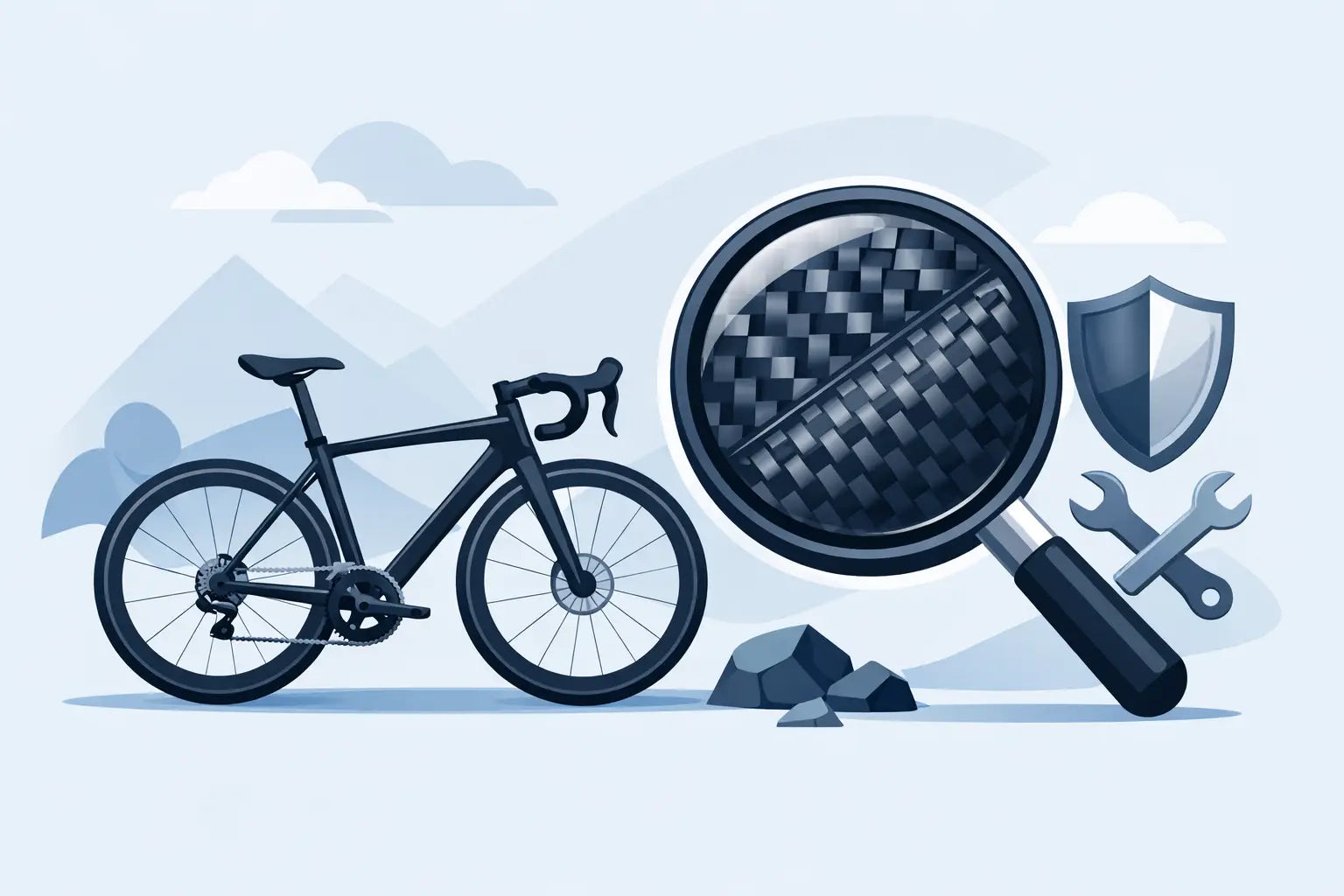
A lot of riders ask the same question just before moving up from aluminium - is a carbon fibre bike durable enough for everyday use, or is it only for careful racers who never lean a bike against a wall?
The short answer is yes, carbon fibre bikes can be very durable. But durability in carbon does not look the same as durability in metal. A carbon frame can feel stiff, light and fast for years, yet still dislike the kind of sharp impact that an aluminium or steel frame might shrug off with just a cosmetic mark. That difference matters if you are choosing a bike for commuting, weekend road rides, gravel use or long-term value.
Is a carbon fibre bike durable for real-world riding?
For normal riding, a well-made carbon fibre bike is absolutely durable enough. Modern carbon frames are not fragile ornaments. They are engineered to handle repeated pedalling loads, road vibration, cornering forces and long hours in the saddle. In many cases, carbon also resists fatigue very well, which means it can maintain its ride quality over a long period when used as intended.
That is why you now see carbon across more than just pro-level race bikes. It appears on endurance road bikes, gravel bikes and even selected value-driven performance models from brands such as Sava and Java. Riders want the lower weight and the smoother ride feel, but manufacturers would not keep producing carbon frames at scale if they could not stand up to regular use.
What catches people out is this: carbon is strong, but it is strong in a specific way. It handles designed loads extremely well. It is less forgiving when a force arrives from an unexpected angle, especially a concentrated hit on one small area.
Why carbon feels strong but still needs care
A carbon frame is built from layers of fibre and resin arranged to deliver stiffness and strength where the bike needs it most. That lets designers tune the frame with far more precision than with many metal frames. One section can be stiff for power transfer, while another is shaped to reduce road buzz.
This is part of the appeal. A good carbon road bike can feel lively under acceleration and noticeably less harsh on rougher roads. For long rides, that comfort can be a real advantage.
But carbon is not the sort of material that likes abuse. Clamp it too hard in the wrong place, drop it onto a sharp kerb edge, or crash directly onto the top tube, and the damage may be more serious than the paint suggests. With aluminium, you might expect dents. With carbon, the concern is cracking or delamination.
That does not make carbon weak. It means the frame should be treated properly, especially during transport, storage and servicing.
Where carbon fibre is genuinely durable
If your definition of durable is “will it last through years of riding?”, carbon does very well. It does not rust. It is not prone to the same kind of corrosion worries that can affect metal frames in wet, humid conditions. For riders in places with regular heat, moisture and frequent washing, that can be a practical plus.
Carbon also handles repetitive stress impressively well when the frame is designed and manufactured properly. A quality frame ridden on roads, park connectors or light gravel can stay structurally sound for a very long time. Many cyclists put huge mileage on carbon bikes without issue.
This is one reason performance-focused riders trust carbon for serious use. Paired with reliable Shimano components and quality tyres such as Continental or Schwalbe, a carbon bike can be a dependable machine rather than a delicate one.
Where carbon is less forgiving
The weak point is impact tolerance. If a bike falls over in the house, that is usually nothing. If it falls drive-side down onto another bike, or the frame takes a direct hit from a metal edge, you want to inspect it carefully.
A crash does not automatically mean the frame is ruined. Plenty of carbon bikes survive spills perfectly well. The issue is that damage is not always as obvious as it is on metal. A deep scratch in the clear coat may be harmless, while a smaller crack near a high-stress area could be more serious.
This is why honest inspection matters. If you hear a new creak, spot a soft area, notice a line in the frame that was not there before, or see paint damage after a knock, it is worth getting the bike checked by an experienced workshop.
Is a carbon fibre bike durable compared with aluminium?
For many buyers, this is the better question. Not whether carbon is durable in isolation, but how it compares with the most common alternative.
Aluminium usually wins on abuse tolerance and lower replacement cost. It is often the more practical option for riders locking a bike outdoors daily, carrying it on crowded transport, or using it as a rough-and-ready commuter. If an aluminium frame gets a scrape or minor ding, many riders simply carry on.
Carbon usually wins on weight, ride quality and performance feel. It can also age very well under normal use because it is not dealing with rust and can resist fatigue effectively. If your riding is mostly fitness, road miles, fast group rides or spirited weekend routes, carbon starts to make more sense.
So which is more durable? It depends on what kind of stress you mean. For long-term riding loads, carbon is excellent. For careless handling and random knocks, aluminium is generally more forgiving.
What affects carbon frame durability most
Not all carbon bikes are equal. Frame quality, lay-up design, manufacturing standards and after-sales support all matter. A properly built carbon frame from an established brand is a very different proposition from an unknown bargain frame with unclear quality control.
Assembly matters too. Over-tightened bolts are a common problem. Carbon components and carbon frames need correct torque settings, especially at the stem, seatpost and seat clamp. Too little torque can cause slipping. Too much can damage the material. That is why professional setup is not just a nice extra - it protects the bike.
Usage also changes the answer. A carbon road bike used on smooth tarmac and stored indoors has an easier life than one regularly bounced through potholes, leaned against railings and packed badly for travel.
How to make a carbon bike last
A carbon bike does not need fussy treatment, but it does reward sensible ownership. Keep the frame clean so you can spot changes early. Use a torque wrench for critical bolts. Avoid clamping the frame in unsafe positions. If you transport the bike in a car or bag, protect contact points properly.
After any crash or heavy knock, inspect the bike before riding again. Look closely around the head tube, down tube, bottom bracket, seat stays and chainstays. If anything seems off, stop and get a proper assessment.
Servicing helps here. Routine checks can catch issues before they become expensive. For riders buying a first carbon bike, support from a shop that handles setup, fit and ongoing servicing can be just as important as the frame material itself. That is one reason many customers prefer buying from a local specialist such as Gcycle rather than treating a carbon bike like any ordinary parcel purchase.
Should everyday riders worry about carbon?
Usually, no. The average rider does not need to be nervous about carbon. If you want a lighter, quicker-feeling bike and you ride in a way that suits it, carbon is a smart upgrade. It is not only for elite riders.
The bigger question is whether it fits your habits. If you are the type who throws the bike into a boot, stores it carelessly and ignores strange noises, aluminium may suit you better. If you want a performance bike and you are willing to maintain it properly, carbon is perfectly realistic for daily enjoyment.
For many cyclists, that is the real balance. Carbon gives more speed, a refined ride feel and strong long-term performance. In return, it asks for a bit more respect.
If you are choosing your next bike, do not ask whether carbon is durable in a vague sense. Ask whether it is durable enough for your riding, your storage, your handling and your expectations. Get that match right, and a carbon bike can serve you brilliantly for years - not as a fragile luxury, but as a serious machine built to be ridden.