Cart
0

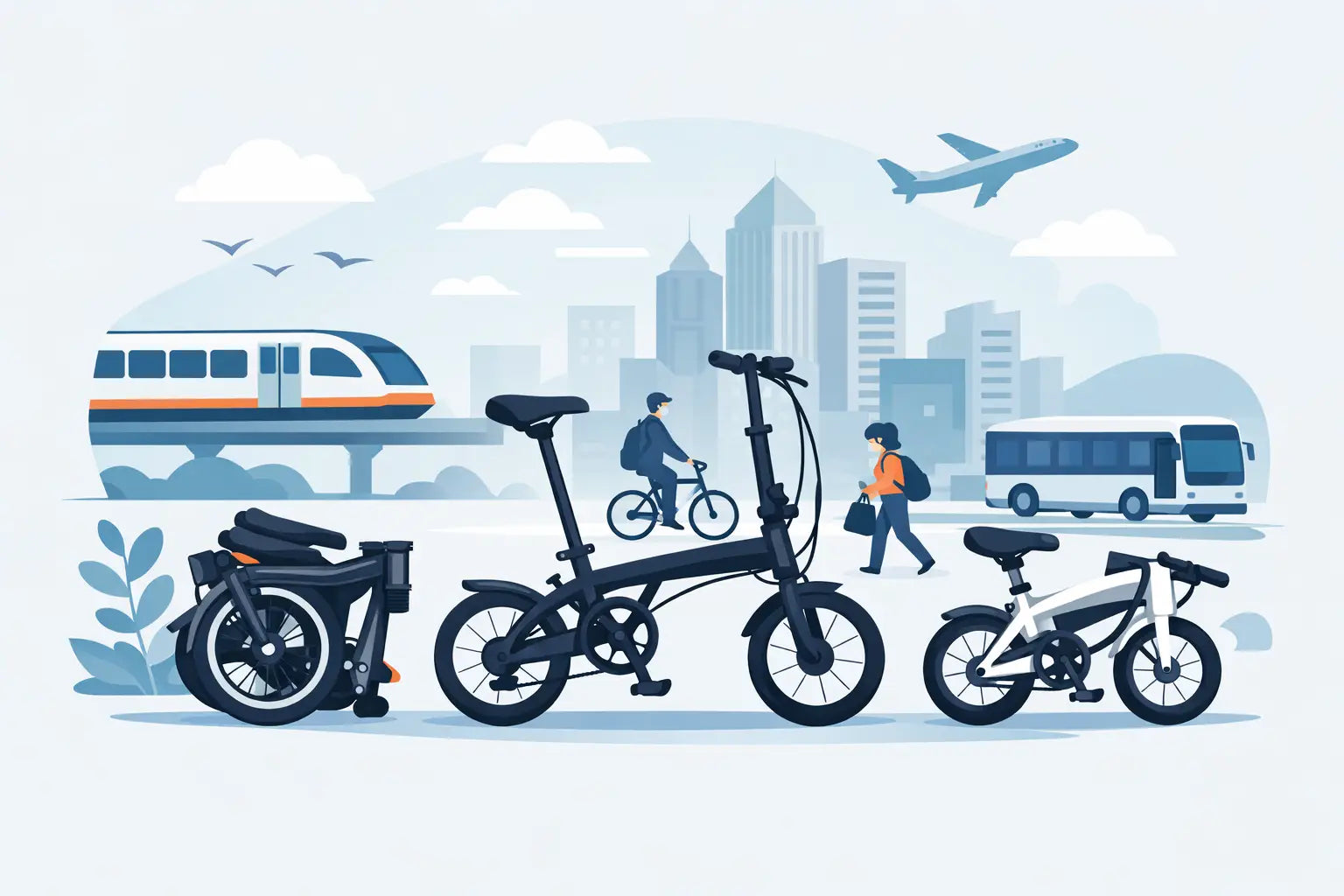
You know the moment: the train doors open, people surge in, and you have three seconds to turn your bike into “carry-on luggage” without clipping anyone’s shoes. That’s the real folding-bike test - not a showroom lap.
If you’re shopping for the best folding bike for commuting, you’re not just buying a smaller bicycle. You’re buying time. Time on transfers, time at the bike rack, time saved when the weather flips and you decide to roll bike-to-MRT-to-office instead of committing to the full ride. The right choice feels fast on the road and effortless off it.
What “best” means for a commuting folding bike
Commuting is a routine, not a weekend flex. A folding bike that’s “best” for commuting nails four things at once: it folds quickly, carries without drama, rides stable at city speeds, and doesn’t punish you with constant adjustments.
The trade-off is real: the easier a bike is to carry and store, the more you give up in pure rolling efficiency compared to full-size wheels. The good news is that modern drivetrains, better tires, and stiffer frame designs have made the gap much smaller - especially on typical urban routes.
Start with your route, not the bike
Before you compare brands or frame materials, map your commute like a mechanic would.
If your day includes elevators, narrow corridors, or a bus transfer, the fold and carry experience matters as much as the ride. If you ride mostly open park connectors and long straight roads, you’ll feel wheel size and gearing more.
Also be honest about weather and clothes. If you commute in office wear, you’ll care about chain protection, fenders, and how clean the drivetrain stays. If you’re okay changing at work, you can prioritize speed and gearing.
The folding system: the make-or-break detail
A folding bike can be light and fast, but if the fold process is fiddly, you’ll dread using it. For commuting, you want a fold that’s repeatable, quick, and secure.
A strong commuter fold has a main frame hinge that closes with a firm latch, minimal flex when riding, and safety catches that don’t “almost” lock. You’ll also want the folded package to stand reliably - it’s a small detail until you’re juggling a coffee, access card, and a folded bike that keeps tipping over.
Pay attention to the parts you touch every day: hinge levers, magnets or hooks that hold the fold together, and seatpost clamps. If those feel cheap, your commute will eventually expose it.
Wheel size: 16 vs 20 inches (and why it matters)
Most commuter foldables land around 16-inch or 20-inch wheels. Both can be excellent. They just feel different.
A 16-inch folding bike typically wins on compactness. It’s easier to weave through stations and fit under desks. The ride can feel more “twitchy” at first because smaller wheels respond faster to steering inputs, but good geometry and proper tire pressure calm that down.
A 20-inch folding bike often feels closer to a normal bike on the road. It rolls over rough patches more comfortably, holds speed better, and gives you more tire choices. The folded package is usually bigger, which can matter in tight apartments or crowded commutes.
If your commute includes bumpy pavement, drain covers, and occasional rain-slick surfaces, don’t ignore tires. A quality tire from a known brand and the right width can transform stability and comfort more than most frame upgrades.
Gearing: pick the “right low,” not the most speeds
More gears look impressive on a product page, but commuting performance comes from range and usability.
If you face flyovers, bridges, or any climb that makes you arrive sweaty, prioritize easier low gears. If your route is mostly flat, you can focus on a smooth mid-range where you spend most of your time.
Internal gear hubs are popular for commuting because they keep shifting clean and low-maintenance. Derailleur systems are often lighter, more efficient, and cheaper to service, but they’re more exposed to grime and curb knocks.
Here’s the simple commuter check: can you start from a traffic light without grinding, and can you cruise at your preferred speed without spinning out? If yes, the gearing is doing its job.
Weight and carrying: “light” is relative
Everyone wants the lightest folding bike - until they see the price jump or the ride gets too harsh. The better question is: can you carry it comfortably for 2-5 minutes when you need to?
If you have stairs, overhead storage, or long station transfers, weight matters a lot. If you roll the folded bike most of the time, weight matters less than how well it rolls when folded and how easy the grab points feel.
Also consider where the weight sits. A bike that’s slightly heavier but balanced and easy to grip can feel lighter in real life than an ultralight bike with awkward carry geometry.
Fit: the fastest way to make a folding bike feel “premium”
Commuters tend to tolerate a bad fit for too long. Don’t.
Seat height is straightforward - you should get full extension without rocking your hips. Handlebar reach is the bigger deal. If the bars are too far, your wrists and shoulders will complain. If they’re too close, you’ll feel cramped and unstable.
Many foldables offer adjustable stems or different handlebar styles. That adjustability is a feature, not a gimmick, as long as it locks solid. A stable cockpit makes a small-wheel bike feel confident at speed.
Commuter-ready features that actually matter
Some accessories are “nice.” Others are the difference between riding daily and letting the bike sit.
Full fenders are a rain-season cheat code. They keep your shoes, socks, and office clothes cleaner. A rear rack matters if you want to ditch the sweaty backpack and carry a work bag. Integrated lighting is convenient, but removable lights can be brighter and easier to replace.
Brakes are another real-world decision. Rim brakes can be lighter and simpler, while disc brakes provide more consistent performance in wet conditions. If you regularly ride in rain, discs are hard to beat.
What to check before you buy (so you don’t regret it later)
When you’re comparing models, don’t get trapped in spec-sheet theater. Touch the bike, fold it, and imagine your Monday.
Look for hinge quality, minimal play at the joints, and a fold that doesn’t require “perfect alignment” to lock. Check wheel trueness, brake feel, and whether the bike tracks straight. Make sure replacement parts are standard enough that servicing won’t become a scavenger hunt.
A folding bike is a long-term relationship. If the brand and shop support are solid, ownership gets dramatically easier.
The “best folding bike for commuting” depends on your priorities
If you want maximum portability and you combine cycling with public transit daily, prioritize compact fold and easy carrying. A 16-inch platform with a quick, secure fold can be the winning move.
If you want the most natural ride feel and you do longer distances on the bike itself, 20-inch wheels and a slightly larger frame feel steadier and faster. You’ll likely enjoy the ride more, which is the whole point.
If you want low fuss for daily use, look hard at weather protection, reliable shifting under load, and components you can service easily. If you want speed and a sporty feel, focus on frame stiffness, gearing that matches your cadence, and tires that roll fast without feeling sketchy.
For riders who want a one-stop place to compare folding commuters alongside road, gravel, and hybrid options - plus get guidance on fit and setup - Gcycle is built for that kind of shopping.
Closing thought
Buy the folding bike that makes you say “I can take this anywhere” on a busy weekday, not the one that looks best parked at home - because the best commute is the one you’ll actually repeat tomorrow.